“Design used to be the seasoning you’d sprinkle on for taste. Now it’s the flour you need at the start of the recipe.’’
— John Maeda, Designer and Technologist
Contact us
Please tell us a bit about your project idea and we’ll get back to you as soon as possible.
Thank you! Your submission has been received!
Oops! Something went wrong while submitting the form.
Privacy Policy
This Privacy policy was published on March 1st, 2020.
GDPR compliance
At UX GIRL we are committed to protect and respect your privacy in compliance with EU - General Data Protection Regulation (GDPR) 2016/679, dated April 27th, 2016. This privacy statement explains when and why we collect personal information, how we use it, the conditions under which we may disclose it to others and how we keep it secure. This Privacy Policy applies to the use of our services, products and our sales, but also marketing and client contract fulfilment activities. It also applies to individuals seeking a job at UX GIRL.
About UX GIRL
UX GIRL is a design studio firm that specialises in research, strategy and design and offers clients software design services. Our company is headquartered in Warsaw, Poland and you can get in touch with us by writing to hello@uxgirl.com.
When we collect personal data about you
When you interact with us in person – through correspondence, by phone, by social media, or through our uxgirl.com (“Site”).
When we get personal information from other legitimate sources, such as third-party data aggregators, UX GIRL marketing partners, public sources or social networks. We only use this data if you have given your consent to them to share your personal data with others.
We may collect personal data if it is considered to be of legitimate interest and if this interest is not overridden by your privacy interests. We make sure an assessment is made, with an established mutual interest between you and UX GIRL.
When you are using our products.
Why we collect and use personal data
We collect and use personal data mainly to perform direct sales, direct marketing, and customer service. We also collect data about partners and persons seeking a job or working in our company. We may use your information for the following purposes:
Send you marketing communications which you have requested. These may include information about our services, products, events, activities, and promotions of our partners. This communication is subscription based and requires your consent.
Send you information about the services and products that you have purchased from us.
Perform direct sales activities in cases where legitimate and mutual interest is established.
Provide you content and venue details on a webinar or event you signed up for.
Reply to a ‘Contact me’ or other web forms you have completed on our Site (e.g., to download an ebook).
Follow up on incoming requests (client support, emails, chats, or phone calls).
Perform contractual obligations such as invoices, reminders, and similar. The contract may be with UX GIRL directly or with a UX GIRL partner.
Notify you of any disruptions to our services.
Contact you to conduct surveys about your opinion on our services and products.
When we do a business deal or negotiate a business deal, involving sale or transfer of all or a part of our business or assets. These deals can include any merger, financing, acquisition, or bankruptcy transaction or proceeding.
Process a job application.
To comply with laws.
To respond to lawful requests and legal process.
To protect the rights and property of UX GIRL, our agents, customers, and others. Includes enforcing our agreements, policies, and terms of use.
In an emergency. Includes protecting the safety of our employees, our customers, or any person.
Type of personal data collected
We collect your email, full name and company’s name, but in addition, we can also collect phone numbers. We may also collect feedback, comments and questions received from you in service-related communication and activities, such as meetings, phone calls, chats, documents, and emails.
If you apply for a job at UX GIRL, we collect the data you provide during the application process. UX GIRL does not collect or process any particular categories of personal data, such as unique public identifiers or sensitive personal data.
Information we collect automatically
We automatically log information about you and your computer. For example, when visiting uxgirl.com, we log your computer operating system type, browser type, browser language, pages you viewed, how long you spent on a page, access times, internet protocol (IP) address and information about your actions on our Site.
The use of cookies and web beacons
We may log information using "cookies." Cookies are small data files stored on your hard drive by a website. Cookies help us make our Site and your visit better.
We may log information using digital images called web beacons on our Site or in our emails.
This information is used to make our Site work more efficiently, as well as to provide business and marketing information to the owners of the Site, and to gather such personal data as browser type and operating system, referring page, path through site, domain of ISP, etc. for the purposes of understanding how visitors use our Site. Cookies and similar technologies help us tailor our Site to your personal needs, as well as to detect and prevent security threats and abuse. If used alone, cookies and web beacons do not personally identify you.
How long we keep your data
We store personal data for as long as we find it necessary to fulfil the purpose for which the personal data was collected, while also considering our need to answer your queries or resolve possible problems. This helps us to comply with legal requirements under applicable laws, to attend to any legal claims/complaints, and for safeguarding purposes.
This means that we may retain your personal data for a reasonable period after your last interaction with us. When the personal data that we have collected is no longer required, we will delete it securely. We may process data for statistical purposes, but in such cases, data will be anonymised.
Your rights to your personal data
You have the following rights concerning your personal data:
The right to request a copy of your personal data that UX GIRL holds about you.
The right to request that UX GIRL correct your personal data if inaccurate or out of date.
The right to request that your personal data is deleted when it is no longer necessary for UX GIRL to retain such data.
The right to withdraw any consent to personal data processing at any time. For example, your consent to receive digital marketing messages. If you want to withdraw your consent for digital marketing messages, please make use of the link to manage your subscriptions included in our communication.
The right to request that UX GIRL provides you with your personal data.
The right to request a restriction on further data processing, in case there is a dispute about the accuracy or processing of your personal data.
The right to object to the processing of personal data, in case data processing has been based on legitimate interest and/or direct marketing.
Any query about your privacy rights should be sent to hello@uxgirl.com.
Hotjar’s privacy policy
We use Hotjar in order to better understand our users’ needs and to optimize this service and experience. Hotjar is a technology service that helps us better understand our users experience (e.g. how much time they spend on which pages, which links they choose to click, what users do and don’t like, etc.) and this enables us to build and maintain our service with user feedback. Hotjar uses cookies and other technologies to collect data on our users’ behavior and their devices (in particular device's IP address (captured and stored only in anonymized form), device screen size, device type (unique device identifiers), browser information, geographic location (country only), preferred language used to display our website). Hotjar stores this information in a pseudonymized user profile. Neither Hotjar nor we will ever use this information to identify individual users or to match it with further data on an individual user. For further details, please see Hotjar’s privacy policy by clicking on this link.
You can opt-out to the creation of a user profile, Hotjar’s storing of data about your usage of our site and Hotjar’s use of tracking cookies on other websites by following this opt-out link.
Sharethis’s privacy policy
We use Sharethis to enable our users to share our content on social media. Sharethis lets us collects information about the number of shares of our posts. For further details, please see Sharethis’s privacy policy by clicking on this link.
You can opt-out of Sharethis collecting data about you by following this opt-out link.
Changes to this Privacy Policy
UX GIRL reserves the right to amend this privacy policy at any time. The latest version will always be found on our Site. We encourage you to check this page occasionally to ensure that you are happy with any changes.
If we make changes that significantly alter our privacy practices, we will notify you by email or post a notice on our Site before the change takes effect.
Learn about UX GIRL's presentation at WaysConf 2024.
Discover practical AI insights for designers.
Explore emerging trends in AI-assisted UX.
Understand how AI is transforming design workflows.
At this year’s WaysConf in Kraków, Magdalena Ostoja-Chyżyńska, the innovative CEO of UX GIRL, took the stage to discuss an increasingly relevant topic: AI as a Collaborative Partner for Designers. In her highly anticipated talk, Magdalena reframed AI’s role in design by showcasing it not just as a productivity tool but as a creative partner capable of transforming the design landscape. Her talk left the audience of digital creators, designers, and managers buzzing with inspiration on integrating AI into their creative processes.
AI’s Role in Today’s Design Workflows
For many, AI in design is often associated with automation and task speed-up. But Magdalena, drawing from her experience at UX GIRL, proposed a different perspective: AI as a dynamic collaborator that enhances creativity, supports ideation, and streamlines complex workflows. By showing how her team at UX GIRL uses AI to unlock new levels of productivity and creativity, she painted a compelling picture of AI’s untapped potential in the design world.
Practical Strategies for AI Integration
One of the session's highlights was Magdalena’s deep dive into the practical ways AI can support design work. She outlined strategies and automation techniques that UX GIRL has effectively implemented, such as:
Rapid Prototyping: By using AI to speed up iterative processes, teams can focus more on refining ideas rather than getting bogged down in repetitive tasks.
Personalization at Scale: AI-driven tools enable UX GIRL to deliver personalized user experiences efficiently, aligning with their mission to create designs that “deliver the wow effect.”
Enhanced Collaboration: AI tools facilitate real-time collaboration and versioning, making it easier for teams to stay aligned and productive across different projects.
Transforming AI from Tool to Team Player
Perhaps the most inspiring takeaway was Magdalena’s perspective on AI’s evolving role. While AI is often seen as a passive tool, she argued for embracing it as a “team player.” By leveraging AI’s analytical and creative capabilities, designers can gain fresh perspectives, overcome creative blocks, and bring a new level of depth to their projects. This reimagined view of AI has the potential to transform workflows, sparking more meaningful and innovative design outcomes.
Resonating with the Audience
The response to Magdalena’s talk was overwhelmingly positive, sparking vibrant discussions throughout the conference halls. Attendees left with new ideas on how to use AI to enrich-not replac-their creative processes, making AI a true partner in design. The session highlighted how AI can be used to not only expedite work but to encourage bold, creative decisions that enhance the user experience.
Marta
Operations Manager
She focuses on office administration, team coordination, and operational support. She manages daily workflows, organizes schedules and internal documentation, and maintains efficient processes across the company.
Over time, digital products accumulate design debt-incremental changes, quick fixes, and legacy decisions that gradually degrade the user experience. This often results in a fragmented, inconsistent interface that frustrates users and complicates workflows. Organizations face a critical dilemma: should they invest in a full redesign or make iterative improvements to refine the existing system?
A complete overhaul can be costly, risky, and disruptive. It requires significant resources, may alienate existing users, and can introduce new usability challenges. On the other hand, continuous iteration allows for gradual refinement but risks perpetuating flawed design foundations. The key to making the right decision lies in assessing the extent of design debt, understanding its impact, and weighing the costs and benefits of each approach.
Understanding Design Debt: The Silent UX Killer
Design debt accumulates in several ways:
Quick fixes and workarounds often address immediate needs but create long-term usability issues
Legacy design decisions may no longer align with user needs or technological advancements
Inconsistent UI patterns emerge when multiple teams contribute without a cohesive design system
Lack of user feedback loops results in decision-making based on assumptions rather than data
Ignoring design debt can lead to a frustrating user experience, increased support costs, and lost revenue. Indicators of high design debt include frequent user complaints, declining conversion rates, and significant usability issues that require extensive workarounds.
The Case for Iterative Improvements
When the core UX remains functional but users experience friction in specific areas, iteration is often the best approach. This method allows teams to make targeted enhancements without disrupting familiar workflows. Iteration works well under several conditions:
Users struggle with specific pain points that usability testing can pinpoint and address
Minor UI inconsistencies create confusion but do not fundamentally hinder functionality
Data-driven insights suggest small optimizations can improve engagement and conversions
The current system remains scalable and does not impose excessive technical constraints
Successful iteration requires a structured approach-identifying pain points, testing solutions, and continuously refining the design based on real-world feedback.
The Case for a Full Redesign
Sometimes, design debt reaches a point where incremental improvements can no longer salvage the user experience. When usability flaws are deeply embedded in the system, a redesign becomes the only viable option. This is particularly necessary when the product relies on outdated technology that restricts innovation, when maintaining the existing system incurs higher costs than rebuilding, or when competitors offer a far superior UX that threatens market relevance.
However, redesigns come with substantial risks. A poorly executed overhaul can alienate loyal users, disrupt workflows, and lead to significant financial setbacks.
One infamous example is Digg’s 2010 redesign. Digg, once a popular social news aggregator, launched a drastic redesign (Digg v4) that removed key features users loved, such as the ability to view upcoming stories before they became popular. The new version was seen as prioritizing publishers over its core community, leading to a massive user exodus. Within weeks, competitors like Reddit saw an influx of former Digg users, and Digg’s traffic plummeted. This serves as a cautionary tale of how failing to align a redesign with user needs can have catastrophic consequences.
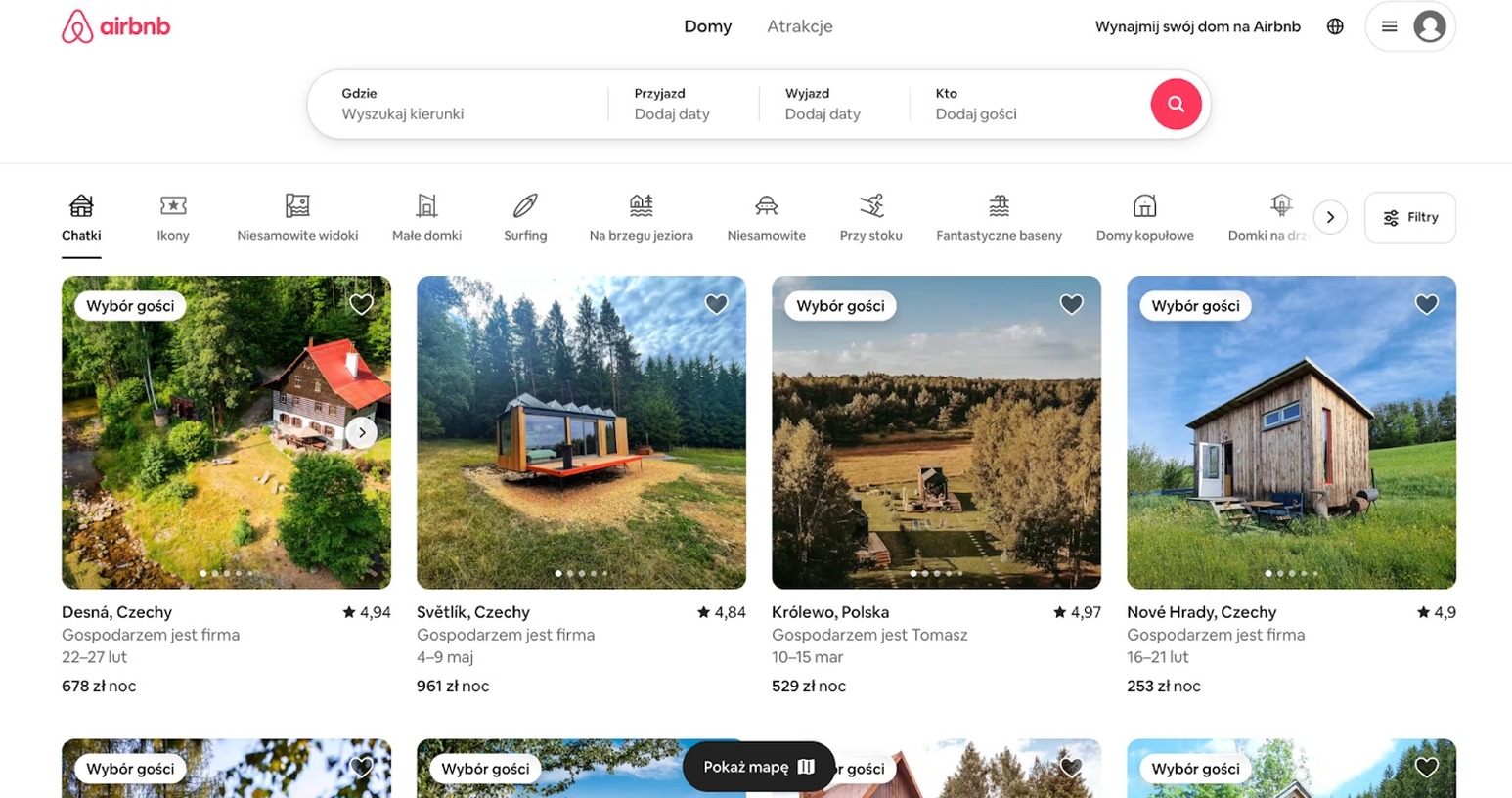
In contrast, Airbnb’s methodical redesign, informed by extensive user research, showcases how a well-planned revamp can drive engagement and growth. In 2014, Airbnb redesigned its search and booking experience to better accommodate user preferences and enhance visual storytelling. The redesign incorporated high-quality photography, improved filters, and a more intuitive booking flow. By leveraging A/B testing and gathering extensive feedback before the full rollout, Airbnb ensured a smooth transition, resulting in increased user satisfaction and higher conversion rates. Their data-driven approach demonstrates how a well-executed redesign can elevate a product without alienating its user base.
Making the Right Call: A Decision Framework
Deciding between iteration and redesign requires a structured evaluation process. Companies should begin with an in-depth usability audit, assessing the severity of design debt through usability scores, conversion rates, churn data, and direct user feedback. Identifying whether the primary issues are surface-level or deeply rooted in the system will clarify whether an iterative approach suffices or a full redesign is necessary.
If usability issues are isolated and correctable through focused adjustments, iteration is likely the better route. Teams should establish clear KPIs and user experience benchmarks to measure the success of iterative changes. Small-scale A/B testing can validate improvements before full implementation, reducing risks and allowing for incremental refinements.
For cases where fundamental usability issues persist, a redesign may be necessary. However, it should be approached methodically—by conducting thorough user research, prototyping potential solutions, and testing new designs before a full-scale launch. A phased rollout can mitigate risk, ensuring that users adapt smoothly and reducing potential backlash from drastic changes.
Beyond usability concerns, business strategy and technical feasibility should guide decision-making. If the current system lacks the flexibility to support long-term innovation, redesigning may be the only viable choice. However, if technical constraints are manageable and the UX can be improved without significant disruption, iteration offers a lower-risk alternative.
Conclusion: Strategic UX Decision-Making
Ultimately, the decision to iterate or redesign depends on the severity of design debt and its impact on users. While iteration allows for gradual enhancements, a full redesign is sometimes the only way to break free from foundational issues. Businesses must take a data-driven approach, leveraging usability testing and user feedback to guide their choices. Regularly auditing design debt ensures that user experience remains a priority and prevents the need for drastic interventions. By making strategic UX decisions, organizations can sustain product growth while maintaining an intuitive, user-friendly interface.
When planning a budget for a new project, we often try to find the right balance between quality and cost. Including UX specialists and designers in the team is sometimes seen as an extra expense, but is it really a cost, or rather an investment? The answer depends on several key factors, which I’ll discuss below.
1. Direct Costs: Salaries
The cost of hiring UX and design specialists varies based on their level of experience and the market they work in. For instance, hiring a less experienced designer typically requires a lower monthly investment, while bringing on a more seasoned professional can significantly increase salary expenses. Freelancers, on the other hand, often charge on a per-project or daily basis, with rates that can fluctuate widely depending on the scope of the work. While these expenses may seem substantial at first glance, they often provide a strong return on investment when considering the overall impact on the design process.
2. Hidden Costs: Problems Without UX and Design
Lack of UX and designers can lead to numerous issues that significantly increase the final project costs:
More iterations and revisions: Without clear design that addresses user needs, the project may require multiple changes during development. Each of these iterations means extra time spent on fixes, and time equals money.
Poor user experience: A poorly designed interface, unintuitive navigation, or lack of visual consistency can turn users away, leading to low conversion rates, poorer business outcomes, and in extreme cases, the need to redesign the entire project.
Inefficient use of resources: Developers might waste valuable time solving problems that stem from a lack of a well-thought-out UX architecture instead of focusing on delivering valuable features.
3. Costs That Save Money in the Long Run
Involving UX and design experts may increase upfront costs, but it prevents much higher expenses down the line. Thoughtful design and optimizing the user journey can minimize the need for future fixes and reduce the cost of technical support.
Additionally, a well-designed product is more likely to succeed in the long term, which means higher revenue and greater customer satisfaction.
4. Example Costs at Different Project Stages
The cost of adding UX and design specialists also depends on the stage of the project:
At the beginning: This is when UX and design costs are most efficient. Specialists have an impact on the entire product architecture, preventing many mistakes down the line.
During the project: The cost might be higher because fixing design errors once development has started is often more time-consuming.
After launch: The highest costs occur when redesigning a product after it’s already live, and users are reporting issues. This is the most expensive scenario and can consume a significant portion of the budget.
5. Is It Worth the Investment?
In summary, adding UX and design specialists to the project is an investment that can save money in the long run. The cost of hiring specialists is significantly lower than the potential losses from lack of UX optimization or the need to redesign the entire system.
With their help, you’ll not only reduce the number of iterations and fixes but also create a product that meets user needs and generates profits for the business.
The design industry is evolving at an unprecedented pace. Artificial intelligence, changing client expectations, and the growing demand for measurable business outcomes are redefining what it means to be a designer in 2026.
These topics took center stage during Round Table #1: How Agencies Are Changing the Design Market for Business, hosted as part of EX FEST – Experience Festival.
Representing UX GIRL, Magdalena Ostoja-Chyżyńska, CEO & Founder, joined Ilona Skarbowska, Krzysztof Miotk, and Michał Madura for an insightful discussion led by Monika Mikowska on how agencies, design teams, and businesses are adapting to a rapidly changing digital landscape.
Design Is No Longer Just About Great Experiences
One of the strongest messages from the discussion was that design has become a strategic business capability.
While creating intuitive and engaging user experiences remains essential, today’s organizations expect design teams to contribute much more. Designers are increasingly involved in product strategy, business decision-making, customer research, and innovation. Their work is measured not only by usability or visual quality but also by the value it creates for users and the business.
AI Is Reshaping Design Workflows
Artificial intelligence is transforming the way design teams operate.
Rather than replacing designers, AI is becoming a powerful tool that supports ideation, research, content creation, prototyping, and repetitive tasks. This shift enables designers to spend more time solving complex problems, collaborating with stakeholders, and focusing on strategic thinking.
The conversation highlighted that embracing AI is no longer optional—it has become an essential part of modern design workflows.
Why Being “Just a Designer” Is No Longer Enough
The role of designers has expanded significantly over the last few years.
Beyond visual and UX skills, professionals are expected to understand business objectives, communicate effectively with cross-functional teams, facilitate workshops, analyze data, and demonstrate the impact of their decisions.
Today’s most successful designers combine creativity with strategic thinking, adaptability, and a deep understanding of both users and business goals.
Agencies Are Evolving Together with Their Clients
As businesses continue to face new challenges, agencies are evolving alongside them.
Modern design agencies are no longer simply delivering interfaces or visual assets—they are becoming strategic partners that help organizations solve complex business problems, accelerate innovation, and create products that deliver measurable value.
The discussion emphasized that collaboration, flexibility, and continuous learning will define the future of successful design teams.
The Audience Joined the Conversation
One of the highlights of the session was the live Q&A, where attendees had the opportunity to ask questions and share their own perspectives on the future of UX, AI, and product design.
The interactive discussion demonstrated that the design community is eager to exchange knowledge, challenge existing approaches, and learn from one another as the industry continues to evolve.
Thank You, EX FEST
We would like to thank EX FEST – Experience Festival for bringing together industry experts and creating a space for meaningful conversations about the future of design.
A special thank you to everyone who joined the session and contributed to the discussion. Conversations like these inspire new ideas, strengthen the design community, and help shape the future of our industry.
Missed the Live Discussion?
If you couldn’t join us live, you can still catch the full conversation.
Watch Round Table #1: How Agencies Are Changing the Design Market for Business to hear insights from Magdalena Ostoja-Chyżyńska (UX GIRL), Ilona Skarbowska, Krzysztof Miotk, and Michał Madura as they discuss the future of design, the impact of AI, evolving client expectations, and the growing business value of UX.


.jpg)
.svg)



.jpg)


